Renting vs Investing in Karachi: Which Makes Sense in 2026?
Karachi's rents keep climbing every year, yet ownership still feels out of reach to a lot of first-time buyers. Here's a straight look at renting vs investing in Karachi, without the sales pitch.
Available now
Looking to buy rather than read? Saima Elite Enclave, Tulip Comforts — or browse all Karachi inventory.
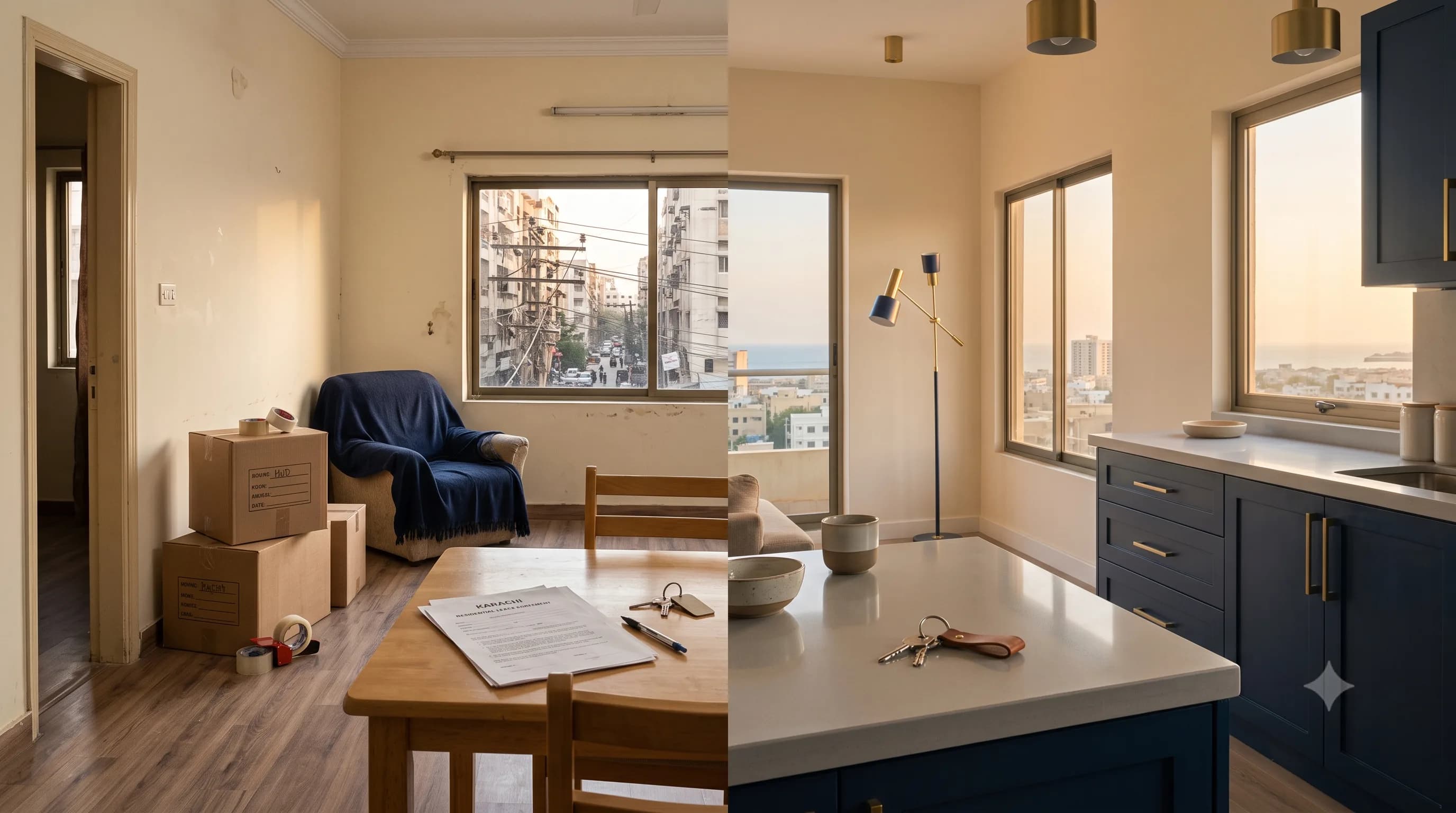
Every year in Karachi, rent goes up before salaries do. Renting vs investing in Karachi isn't a theoretical question for most first-time buyers — it's the math they're doing every time their landlord mentions a "revision" at renewal. The honest answer depends less on ambition and more on what a buyer's monthly outflow actually buys them over time.
What Monthly Rent Actually Costs You in Karachi
A two-bed apartment in a mid-tier Karachi neighbourhood typically rents in a range that climbs every twelve to eighteen months, regardless of whether the tenant's income does. Over five years, that adds up to a significant sum that leaves the renter with nothing to show for it beyond a folder of expired agreements.
Renters also absorb costs that ownership avoids over time — advance deposits, brokerage fees on every move, and the disruption of relocating when a landlord decides to sell or reclaim the unit. None of this builds equity. It simply covers the cost of a roof for another year.
How an Installment Plan Apartments Karachi Option Compares
This is where the installment plan apartments Karachi model changes the arithmetic. Rather than one lump-sum purchase, a project like Saima Elite Enclave in Gulistan-e-Jauhar structures payment across a 36-month plan — a down payment followed by staggered instalments through construction and possession.
For a buyer already paying rent, the monthly outflow under a structured plan can sit close to what they're already spending — except every payment reduces what's owed on an asset they'll eventually hold outright. Saima Elite Enclave's 2/3/4-bed DD apartments start from PKR 2.05 crore, with construction currently more than halfway complete, which shortens the runway between first payment and possession considerably.
The real comparison isn't rent versus a mortgage — it's rent versus a payment plan that ends in ownership instead of renewal.
Property Investment Karachi: Building Equity vs Renting
Property investment Karachi has historically outpaced inflation in established and emerging neighbourhoods alike, particularly where infrastructure is maturing. A renter's monthly payment is a pure expense. A buyer's instalment, by contrast, converts into ownership stake with every payment cleared — and that stake typically appreciates independently of what the buyer paid in.
Beyond developer instalment plans, buying power for first-time buyers in Karachi has genuinely improved in recent years, through payment routes that let a buyer spread ownership cost over a longer term — sometimes close to a decade — rather than a single upfront sum. Structured this way, the maths starts to look different: ten years of rent still ends with no home, while ten years of structured payments toward an eligible property ends with one. Not every unit qualifies for every payment route, and eligibility varies by project and buyer profile, so this is worth a direct conversation with an advisor rather than assuming it applies universally. Lateef Properties can explain the payment terms offered within the projects available; availability and eligibility must be confirmed for the specific project.
Pre-Launch vs Ready-to-Move: Timing Your Entry
The pre-launch vs ready-to-move decision shapes how quickly a buyer stops paying rent altogether. Pre-launch allocations, such as Tulip Comforts in Scheme 33, are typically priced lower precisely because possession sits further out — a buyer accepts a longer wait in exchange for a more favourable entry point and extended payment window.
Ready-to-move inventory costs more upfront but ends the renting question immediately. First-time buyers weighing renting vs investing in Karachi often split the difference: they stay in a rented unit through a pre-launch project's construction period, using that time to complete the instalment schedule before moving in debt-free of any landlord.
Rental Yield Karachi: What Investors Should Weigh
For buyers thinking beyond their own residence, rental yield Karachi is the other side of this comparison. An investor who purchases and then rents the unit out effectively becomes the landlord instead of the tenant — the same monthly payment that once flowed outward now flows in, while the underlying asset continues to belong to them.
Areas near established commercial corridors, such as those closer to M.A. Jinnah Road and DHA, tend to sustain steadier rental demand due to proximity to offices and established infrastructure. An advisor can help match a unit's location and configuration to realistic rental demand before a purchase, rather than after.
Who Should Still Rent in Karachi
None of this means renting is always the wrong call. It remains the sensible option for:
- Buyers who expect to relocate cities or countries within two to three years
- Households still building the down payment for a structured plan
- Anyone unsure of which neighbourhood suits their long-term needs
Renting can be a deliberate holding position while a buyer saves toward an instalment plan — the mistake is treating it as permanent by default, simply because it felt easier to start.
Making the Call
The renting vs investing in Karachi decision usually comes down to one question: is the buyer's monthly payment building something, or just covering a year at a time? For anyone whose rent has climbed twice in the last three years without anything to show for it, a structured payment route toward an eligible property is worth comparing against the next renewal notice before it arrives.
Featured for you
Projects mentioned in this guide.

Saima Elite Enclave
Saima Builders
Gulistan-e-Johar
Starting Price
PKR 2.05 Cr
Unit Types
4 Bed Drawing · 3 Bed Drawing · 2 Bed Drawing
Pre-launch 2, 3 and 4-bedroom apartments in Gulistan-e-Johar Block 11, near Kamran Chowrangi.

Tulip Comforts
Al Wahab Builders
Scheme 33
Starting Price
PKR 1.95 Cr
Unit Types
4 Bed Drawing · Duplex · 3 Bed Drawing · Duplex · 2 Bed DD / 3 Bed Lounge
Luxury 2, 3 & 4 Bedroom apartments in Scheme 33.
Ready to act on this?
Browse curated Karachi inventory.
Compare projects from pre-launch to ready to move by location, type and budget, or ask an advisor about current developer availability.